
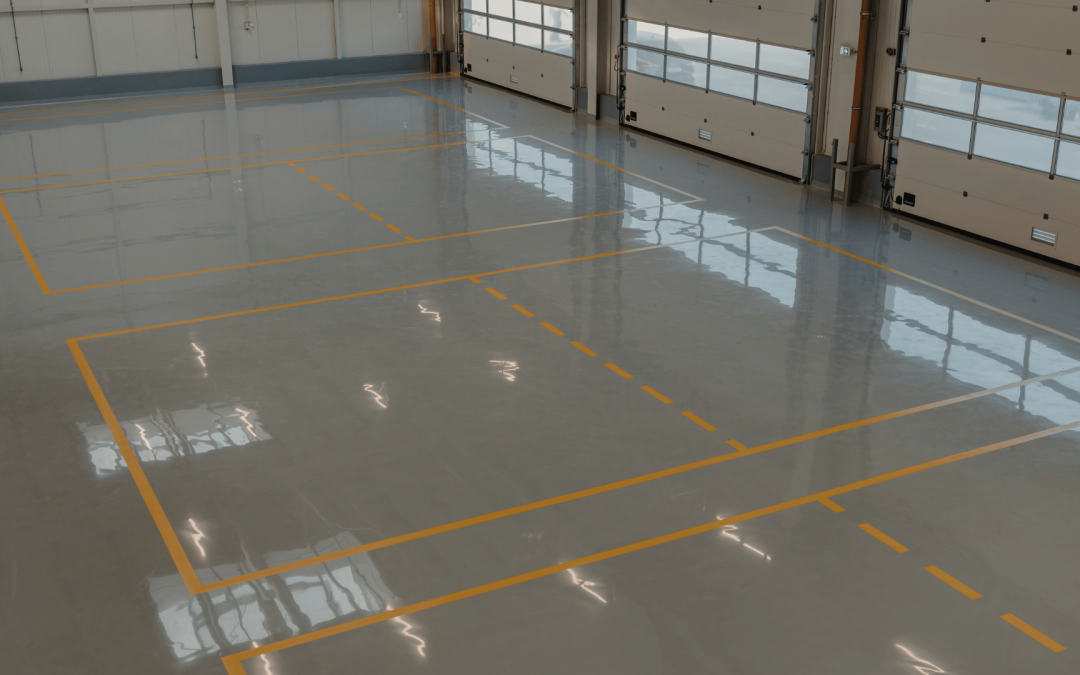
Warehouse and industrial environments are fast-paced spaces where workers, forklift trucks, and heavy machinery operate side by side. Without clear visual guidance on the ground, the risk of collisions, injuries, and operational bottlenecks increases significantly. A well-planned floor marking system does more than keep a facility looking tidy – it helps protect your workforce, supports regulatory compliance, and can genuinely improve the efficiency of your daily operations.
We explain the key UK regulations governing warehouse floor markings, the most common types of markings your facility is likely to need, colour-coding standards, material options, and best practices for getting your floor marking right first time.
Why Are Warehouse Floor Markings Important?
Warehouses, factories, and distribution centres present some of the highest-risk working environments in the UK. Pedestrians, forklift operators, pallet trucks, and other material handling equipment all share the same space, often at pace. Floor markings create clearly defined zones that separate different types of traffic, highlight hazardous areas, and guide everyone through the facility safely.
Beyond safety, a well-implemented marking system supports a leaner, more organised operation. Staff can quickly identify storage zones, locate equipment, and navigate the building without hesitation. Visitors and contractors benefit too, recognising safe pedestrian routes and restricted areas at a glance. When markings are consistent and well-maintained, they reduce confusion, cut down on near misses, and contribute to a more productive workplace.
What Are the UK Regulations Around Floor Markings?
Several pieces of UK legislation and guidance documents relate to how warehouse and industrial floor markings should be implemented. Understanding these requirements is essential for staying compliant and protecting your team.
Health and Safety at Work Act 1974
The foundation of workplace safety law in the UK, this Act places a duty on employers to protect the health and safety of everyone on site. Implementing suitable control measures ( including floor markings) is a practical way to meet this obligation.
Workplace (Health, Safety and Welfare) Regulations 1992
These regulations require that every workplace is organised so pedestrians and vehicles can circulate safely. Section 17 specifically mandates that vehicle movement should be segregated from pedestrian movement wherever reasonably practicable. Floor markings are one of the most effective methods of achieving this segregation.
Management of Health and Safety at Work Regulations 1999
Employers must carry out risk assessments and put appropriate measures in place. In warehouse environments, floor markings help reduce the risk of collisions between pedestrians and vehicles and should be used wherever feasible.
HSE Guidance – HSG76
The Health and Safety Executive’s guidance document on warehousing and storage recommends the use of floor markings to indicate pedestrian walkways, vehicle routes, no-go zones, loading and unloading areas, and racking protection zones. This is essential reading for any facility manager responsible for warehouse safety.
ISO and British Standards
Two key standards also apply: BS ISO 7010 covers signage and safety symbols that can be incorporated alongside floor markings, while BS EN 349 relates to minimum gaps for safety. Incorporating recognised floor symbols and colour coding alongside your line markings ensures clear, consistent communication throughout the facility.
What Types of Floor Markings Does Your Warehouse Need?
Every industrial facility is different, but most warehouses and factories require several common types of floor marking to maintain safety and order:
- Pedestrian walkways and aisle lanes. These clearly define safe routes for people on foot, separating them from vehicle traffic. They are typically marked with solid lines and are one of the most critical safety features in any busy warehouse.
- Forklift truck and vehicle lanes. Often highlighted using dashed lines, arrows, and directional cues, these markings guide vehicle traffic flow and reduce the risk of collisions, particularly near racking aisles and junctions.
- Storage and equipment zones. Clearly marked areas for raw materials, finished goods, cages, trolleys, and other equipment keep the workspace organised and make it easier for staff to locate and return items efficiently.
- No-go and hazardous zones. Brightly coloured markings signal areas where entry is restricted due to dangerous equipment, substances, or processes. These are essential for preventing accidents around high-risk zones.
- Keep clear areas. Emergency exits, fire equipment access points, and electrical panels must remain unobstructed at all times. Clear floor markings ensure these critical zones stay accessible, supporting rapid response in an emergency.
- Stair edge markings. In multi-level facilities, marking the edges of each step improves visibility and significantly reduces the risk of slips, trips, and falls – particularly in low-light areas or on evacuation routes.
- High traffic areas. Junctions, crossing points, and busy loading zones benefit from additional markings to manage the flow of both pedestrian and vehicle traffic and prevent bottlenecks.
How Does Colour Coding Work for Floor Markings?
A consistent colour-coding system is one of the most effective ways to communicate different zones and hazards across your facility. While there are no strict legal requirements dictating which colours must be used for specific purposes, consistency is vital. Once a colour is assigned to a particular function (such as yellow for aisles or green for pedestrian walkways), it should be used exclusively for that purpose throughout the entire building.
Common colour associations used across UK warehouses include:
- Yellow for aisles, walkways, and caution areas
- White for equipment and storage zones
- Red for keep clear zones, fire exits, and danger areas
- Green for safe pedestrian routes
- Tellow-and-black striping for hazardous areas
Your site safety plan should clearly document what each colour means so that all staff, visitors, and contractors can navigate the space with confidence.
What Materials Are Used for Floor Markings?
Choosing the right material depends on the environment, the level of traffic, and how long the markings need to last.
Floor Marking Tape
Tape is a flexible, convenient option that works well for temporary or semi-permanent applications. It is quick to install with no curing time required and is available in a variety of colours and finishes, including anti-slip and reflective variants. However, tape can peel or lift in high-traffic areas and may need replacing more frequently than paint-based solutions.
Paint-Based Floor Markings
For long-term, heavy-duty environments, painted floor markings are the more durable choice:
- Epoxy two-pack paint offers excellent adhesion and typically lasts two to three years in high-wear zones, though it does require a minimum curing time of around 24 hours.
- Water-based acrylic paints with UV curing offer lifespans of over five years and allow the area to be returned to use immediately after application.
Both options can incorporate anti-slip and anti-scuff properties, making them well-suited to demanding industrial environments. Surface preparation is critical for achieving the best results with any paint system – cleaning, repairing, and priming all surfaces before application ensures a professional, lasting finish.
Best Practices for Warehouse Floor Markings
Getting the most from your floor marking system means going beyond simply painting lines on a floor. Following best practices will help ensure your markings remain effective and compliant over time:
- Follow a consistent colour code. Staff should be able to recognise markings instantly without second-guessing their meaning. Consistency across the entire facility is essential.
- Ensure high visibility. In low-light areas, consider reflective or photoluminescent materials. Good overhead lighting also enhances the visibility of all ground-level markings.
- Supplement with signage and symbols. Arrows, hazard triangles, and pedestrian symbols reinforce the message of your floor markings. This is particularly valuable in multilingual workplaces.
- Inspect and maintain regularly. Floor markings wear over time, especially in high-traffic zones near racking and loading areas. Include marking inspections in your regular safety checks and replace any faded or unclear lines promptly.
- Train your workforce. Floor markings are only effective if everyone understands what they mean. Include floor marking awareness in induction training and deliver regular refreshers to keep safety front of mind.
- Update when layouts change. If your racking configuration, storage zones, or workflow patterns change, your floor markings must be updated to match. Outdated markings create confusion and compromise safety.
How Halls Decorators Can Help
With over 50 years of experience delivering industrial painting services across Yorkshire, Greater Manchester, and Lancashire, Halls Decorators understands the practical demands of warehouse and factory environments. Our specialist industrial floor painting services include epoxy floor coatings, anti-slip finishes, safety marking and stencilling, and hard-wearing polyurethane coatings.
We carry out comprehensive floor preparation before every application, ensuring surfaces are cleaned, repaired, and primed for a durable, professional finish. Our CHAS-accredited, CSCS and SSSTS certified team works to tight deadlines while minimising disruption to your operations, with flexible scheduling that fits around your business.
Whether you need a full floor marking system for a new facility or a refresh of existing markings to maintain compliance, our team is happy to advise you on the most suitable materials and approach. Contact us today for a free, no-obligation quote.