
Flooring in industrial and commercial settings takes a serious amount of punishment. Heavy foot traffic, moving machinery, chemical exposure, and daily wear all take their toll on unprotected concrete surfaces. Epoxy floor coatings offer a proven solution, creating hard-wearing, seamless surfaces that protect your floors while improving safety and appearance. We explain what epoxy coatings are, where they perform best, their key advantages, how they are applied, and what to consider before committing to a project.
What Are Epoxy Floor Coatings?
Epoxy floor coatings are formed through a chemical reaction between epoxy resin and a hardener component. Once cured, the result is a rigid, seamless surface that bonds directly to the concrete substrate beneath it. This creates a protective layer that is significantly stronger and more resilient than standard paint or untreated concrete.
The cured surface resists mechanical stress, chemical exposure, and moisture penetration, making it one of the most dependable flooring solutions available for demanding environments. Epoxy systems can also be tailored in terms of thickness, texture, and finish, allowing facilities to match the coating precisely to their operational requirements.
Where Are Epoxy Floor Coatings Used?
Epoxy flooring is commonly specified in environments where durability, hygiene, and safety are non-negotiable. The versatility of the material means it suits a broad range of industrial and commercial settings:
- Warehouses and distribution centres benefit from surfaces that withstand forklift traffic, pallet loading, and constant movement without cracking or wearing down.
- Manufacturing and production facilities rely on epoxy coatings to resist impact damage, chemical spills, and the friction caused by heavy equipment.
- Food and beverage processing areas require hygienic, non-porous surfaces that prevent bacterial growth and are straightforward to clean to comply with health regulations.
- Healthcare facilities demand sterile, dust-resistant floors that support strict hygiene standards across high-traffic corridors, wards, and treatment areas.
- Retail and commercial spaces use epoxy to maintain a polished, professional appearance while handling the daily wear of customer footfall.
- Automotive workshops and garages need chemical-resistant surfaces that cope with oils, fuels, and solvents without deteriorating.
This range of applications reflects the material’s ability to perform under vastly different conditions whilst maintaining its structural integrity and appearance.
What Are the Key Advantages of Epoxy Floor Coatings?
Epoxy coatings deliver a combination of practical and financial benefits that few other flooring options can match. Understanding these advantages helps facility managers make informed decisions about long-term flooring strategies.
Outstanding Durability and Longevity
Once cured, epoxy forms an exceptionally hard surface capable of withstanding heavy machinery, forklift traffic, and sustained foot traffic without significant wear. Unlike tiled or bare concrete floors, epoxy eliminates weak points such as grout lines, joints, and pores where damage typically begins. A correctly specified and professionally installed system can last well over a decade, reducing the frequency and cost of repairs and replacements.
Superior Chemical and Moisture Resistance
Chemical resistance is one of the standout properties of epoxy flooring. In environments where spills of oils, solvents, acids, or cleaning agents are a daily reality, the non-porous barrier prevents liquids from seeping into the substrate. This protects the underlying concrete from degradation while also making spillages far simpler to clean up, maintaining both safety and hygiene standards.
Enhanced Workplace Safety
Safety is a critical concern across industrial and commercial environments, and flooring plays a direct role. Anti-slip additives can be incorporated into epoxy coatings during application to reduce the risk of slips and falls, particularly in areas prone to moisture or spillages. Coloured floor markings, hazard zones, and pedestrian walkways can also be integrated directly into the coating, supporting health and safety compliance and improving the flow of both foot and vehicle traffic.
Low Maintenance and Easy Cleaning
The seamless, non-porous finish of epoxy flooring prevents dust, dirt, and bacteria from accumulating in cracks or joints. Routine maintenance typically involves straightforward sweeping and mopping, which is particularly valuable across large industrial floor areas where cleaning can otherwise be labour-intensive and costly. This ease of upkeep helps organisations allocate resources more effectively and reduces operational downtime.
Cost-Effectiveness Over Time
Whilst the initial investment in epoxy flooring can be higher than some alternatives, the long-term financial benefits are considerable. Reduced repair frequency, lower cleaning costs, and extended service life all contribute to a significantly lower total cost of ownership. The reflective properties of glossy epoxy finishes can also improve ambient lighting within facilities, potentially reducing energy costs associated with artificial lighting.
Aesthetic Versatility
Epoxy coatings are available in a wide range of colours, finishes, and textures, allowing businesses to maintain a professional environment that reflects their brand. From high-gloss showroom finishes to practical colour-coded zones in production areas, the material offers visual flexibility alongside its functional performance. Logos, branding, and bespoke colour schemes can all be incorporated into the floor design.
How Is Epoxy Flooring Applied?
Proper application is essential to the performance and longevity of any epoxy floor coating. The process requires thorough preparation and professional expertise to achieve a durable, high-quality result:
- Surface cleaning removes all oils, chemicals, dirt, and contaminants from the existing concrete substrate to ensure a clean bonding surface.
- Mechanical preparation through diamond grinding, shot blasting, or milling creates the correct surface profile for the epoxy to adhere effectively.
- Priming seals the prepared concrete and provides a stable base layer for the coating system.
- Crack and defect repair uses epoxy filler to address any holes, cracks, or imperfections in the substrate before the main coating is applied.
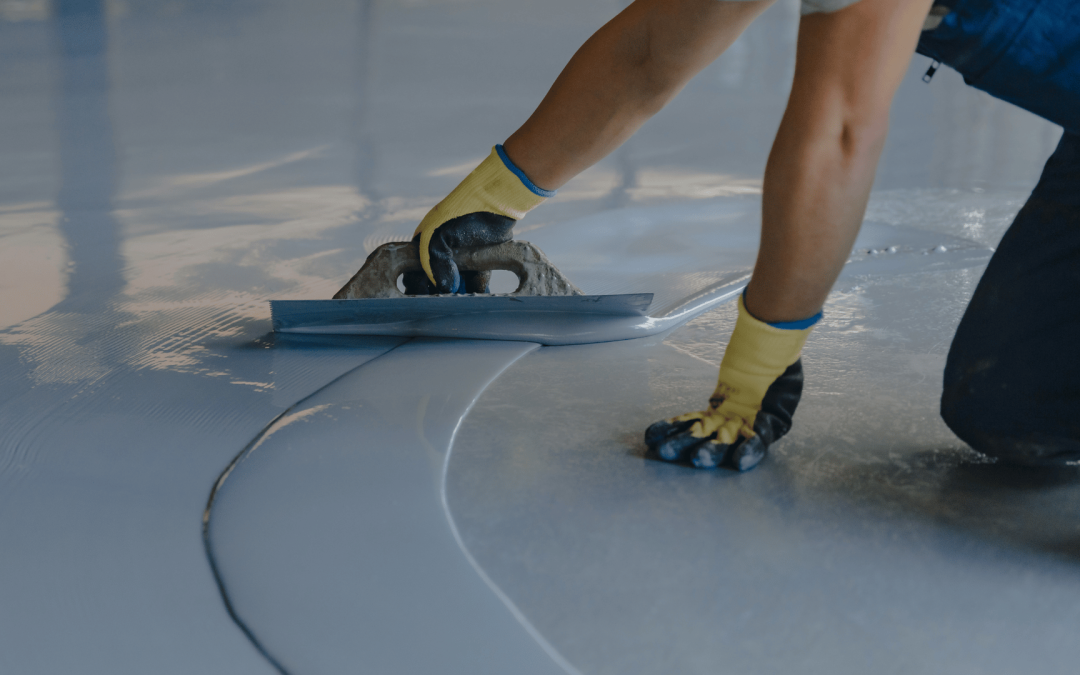
- Coating application applies the epoxy system in carefully controlled layers using rollers, trowels, or spray equipment depending on the specification.
- Curing allows the chemical reaction to complete fully, with the floor typically ready for use within several days depending on conditions.
Poor preparation or inexperienced application can lead to issues such as bubbling, delamination, or pinholing. Temperature and humidity also influence the curing process, which is why professional installation by experienced contractors is essential to achieving a reliable finish.
What Should You Consider Before Choosing Epoxy Flooring?
Epoxy coatings perform exceptionally well in the right conditions, but there are practical considerations worth noting. Conventional epoxy resins can discolour when exposed to prolonged UV light, which may affect aesthetics in spaces with significant natural daylight. This can be addressed by specifying UV-stable polyurethane topcoats where necessary.
Modern low-VOC and solvent-free formulations have also addressed earlier concerns around odour and air quality during installation, enabling work to proceed in occupied or sensitive environments with minimal disruption.
How Halls Decorators Can Help
Halls Decorators bring over 50 years of experience in commercial and industrial floor painting and decorating, including specialist floor coating services for warehouses, factories, manufacturing facilities, and commercial premises across Yorkshire and Greater Manchester. Our CHAS-accredited, CSCS-certified team understands the demands of working in operational environments, delivering professional epoxy floor coatings with meticulous preparation and minimal disruption to your daily operations.
We work closely with facility managers to recommend the most suitable coating systems for each environment, whether that involves anti-slip finishes for wet areas or chemical-resistant surfaces for production floors. Every project begins with a thorough consultation to understand your requirements, followed by clear timescales and a commitment to quality workmanship.
Contact our experienced team today to discover how professional floor coatings can protect and transform your industrial or commercial space.